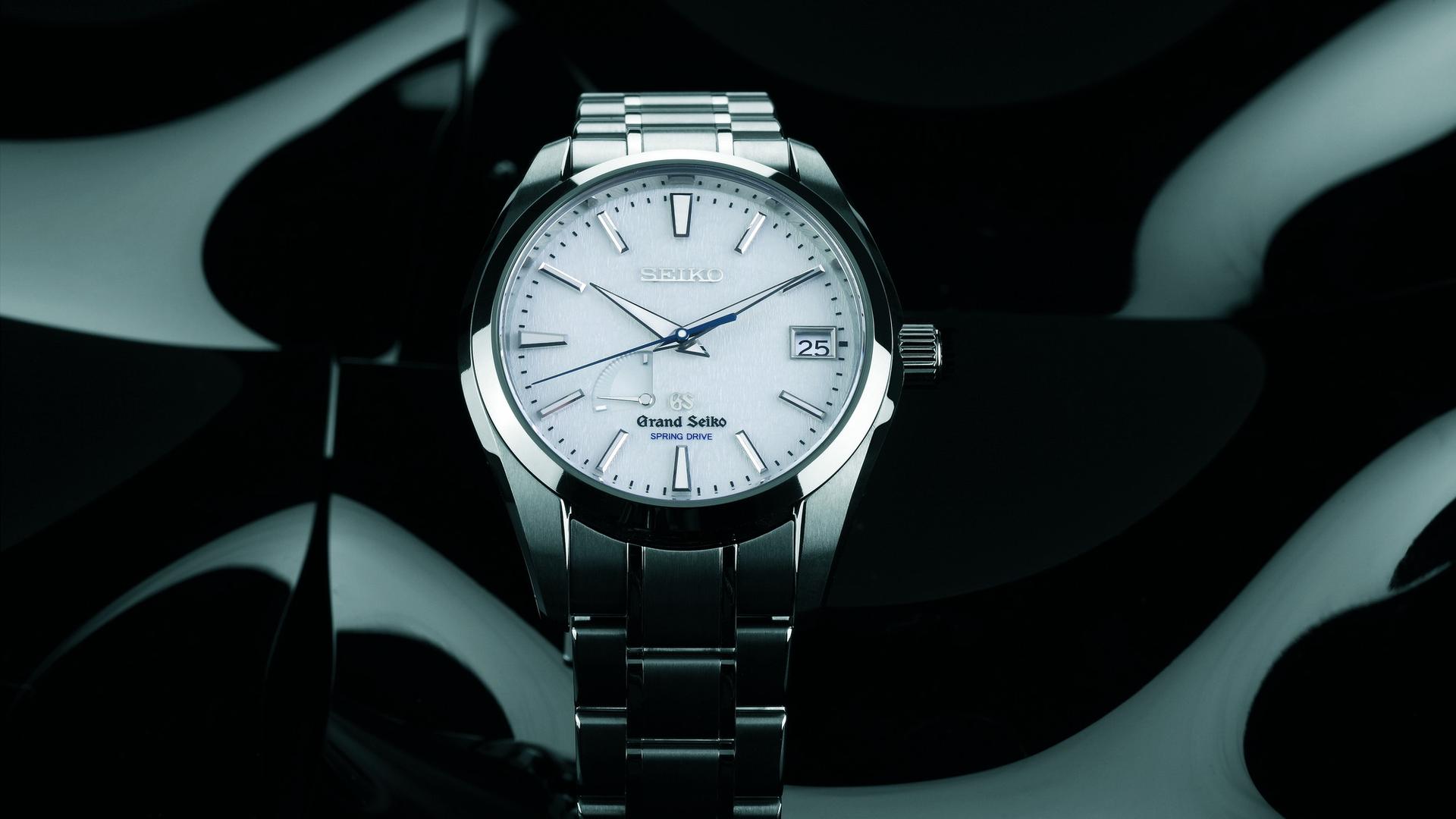
Grand Seiko SBGA011, a Spring Drive reference.

Grand Seiko

Browse listings

Engineered a hybrid escapement no Swiss maison would touch.

Grand Seiko is a Japanese manufacturer that separated from Seiko as an independent brand in 2017. Known for Spring Drive, Zaratsu polishing, and nature-inspired textured dials.

From
$4,500
lowest current ask
Active listings
3

Grand Seiko history

Grand Seiko started in 1960 as Seiko's highest-grade movement line, designed to compete head-to-head with Swiss chronometer-grade movements at a time when Japanese watchmaking was still seen internationally as a value tier. The first Grand Seiko reference (the J14070) targeted the Swiss official chronometer standard and beat it on several precision metrics. Through the 1960s Grand Seiko movements consistently won the Neuchâtel and Geneva observatory chronometer competitions, ranking ahead of most Swiss entries.

The quartz crisis interrupted Grand Seiko mechanical development. The brand pivoted to a sub-line of Seiko's quartz watches in 1968 with the legendary 9F caliber family, the most accurate production quartz movement ever made (one second per month accuracy when sealed against temperature variation). Mechanical Grand Seiko did not return until 1988 with the caliber 9S.

Spring Drive arrived in 1999, the world's first movement to use a traditional mainspring for power but a quartz crystal for timing regulation. The result is a movement with mechanical-watch power flow but quartz-watch accuracy (typically one second per day) and a perfectly continuous seconds hand sweep. Spring Drive is now Grand Seiko's signature complication, used across the catalog from the Spring Drive Snowflake to the high-complication Heritage Collection.

Grand Seiko separated from Seiko as an independent brand in 2017 with its own logo (dropping the 'Seiko' lettering above the GS shield), independent retail boutiques, and global pricing positioning roughly halfway between mid-tier Swiss brands (Tudor, Longines) and entry haute horlogerie (Omega complications, Cartier). Production is split between two manufactures: the Shinshu Watch Studio in Shiojiri (Spring Drive and quartz) and the Shizukuishi Watch Studio in Morioka (mechanical movements).

Grand Seiko icons

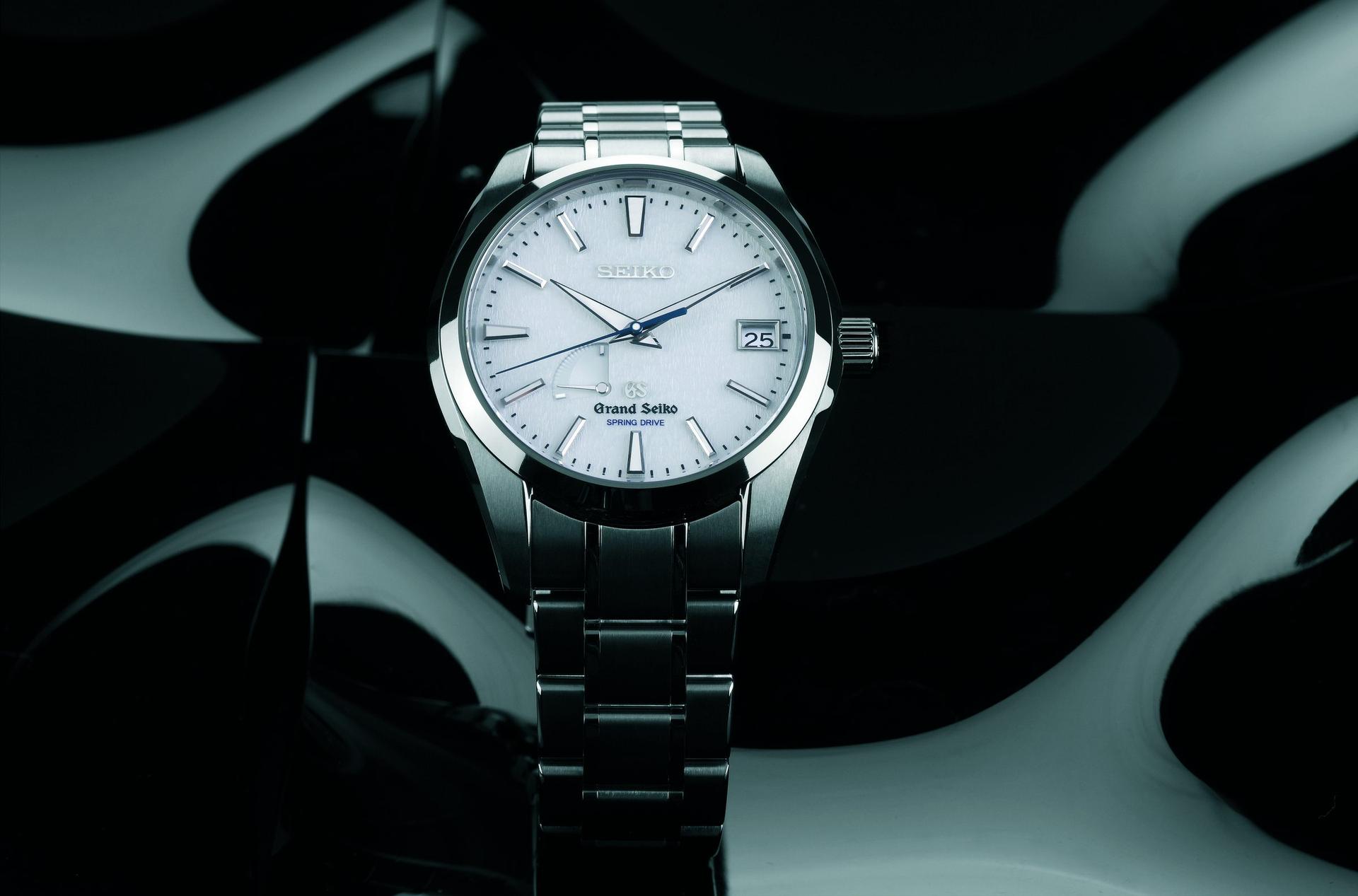
Grand Seiko Snowflake reference SBGA011 in titanium, showing the snow-textured silver dial, blue Spring Drive seconds hand, power-reserve indicator and date window.

Spring Drive Snowflake

Ref. SBGA211

The reference that introduced Spring Drive to most Western collectors. 41mm titanium case, dial textured to evoke fresh-fallen snow in the Shinshu mountains, caliber 9R65 Spring Drive movement. The continuous-sweep seconds hand and one-second-per-day accuracy are the technical hooks; the dial finish is the visual one.

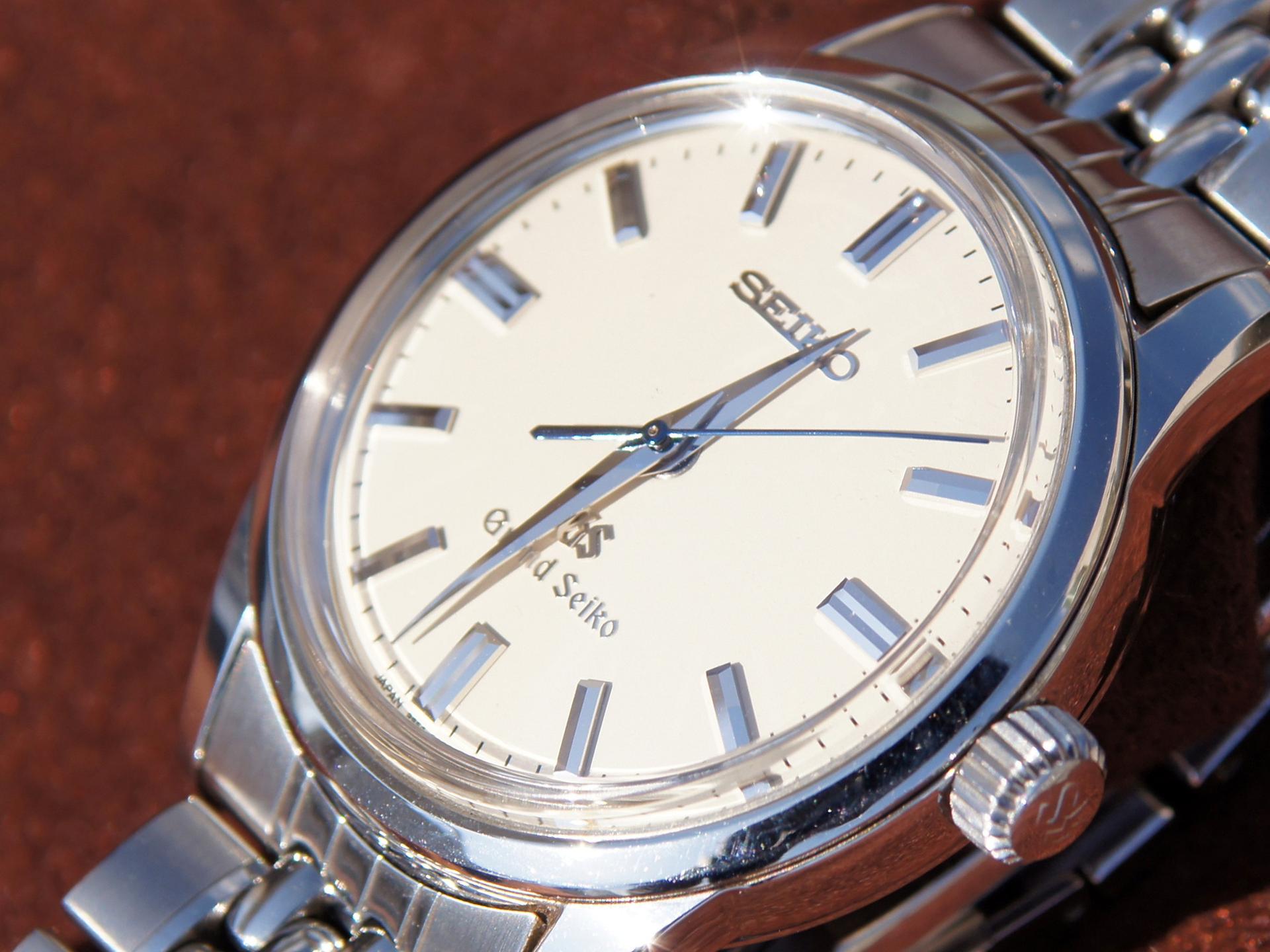
Grand Seiko hand-wound Heritage reference SBGW005 in stainless steel, showing the cream dial with faceted applied indices, the GS medallion, and the Grand Seiko signature.

Heritage Collection SBGW291

Ref. SBGW291

The contemporary version of the 1960 first Grand Seiko reference, in 38mm 18k yellow gold. Caliber 9S64 manual-wind movement, hand-applied Zaratsu-polished case, blued steel seconds hand. The brand's clearest expression of its 1960s design language.

Evolution 9 Series SLGH005

Ref. SLGH005

The white birch dial reference. 40mm Ever-Brilliant Steel case, dial textured to match the bark of white birch trees in Shizukuishi, caliber 9SA5 in-house high-beat (36,000 vph) movement with 80-hour power reserve. The flagship of the modern Evolution 9 design language.

Sport Collection SBGN003

Ref. SBGN003

The Quartz GMT in steel. Caliber 9F86 GMT quartz movement (the most accurate production quartz ever made, +/-10 seconds per year), 39mm case, ceramic 24-hour bezel insert. Designed for travelers who want Grand Seiko finishing without daily mechanical-watch adjustment.

Available now

Common questions about Grand Seiko

What is the Grand Seiko Spring Drive movement?
Spring Drive is a hybrid movement invented by Seiko and introduced in Grand Seiko watches in 1999. It uses a traditional mainspring and gear train (like a mechanical watch) for power, but regulates timing with a quartz crystal (like a quartz watch) rather than a mechanical escapement. The result is a movement that is wound by the rotor like an automatic, has a mechanical-watch power-reserve indicator, but achieves quartz-grade accuracy (typically +/- one second per day) and a perfectly continuous seconds-hand sweep without the discrete tick of any other movement type. The current Spring Drive caliber 9R65 powers the Snowflake and most modern Grand Seiko Spring Drive references; high-complication Spring Drive movements (8R-series) sit above them. Spring Drive is exclusive to Grand Seiko within the Seiko group.
How does Grand Seiko's Zaratsu polishing work?
Zaratsu polishing is a Japanese hand-finishing technique used on Grand Seiko cases to create a perfectly flat, distortion-free mirror surface. A skilled polisher (typically with 10+ years of training) presses the case against a tin or zinc rotating wheel coated with abrasive compound, holding the case at a precise angle and pressure for several seconds, then moving to the next facet. The technique produces case edges that are sharper than machine-polished cases (modern CNC polishing typically rounds edges slightly) and reflective surfaces that show distortion-free mirror images. Grand Seiko publishes the names of its Zaratsu masters; only a handful of polishers are certified at any time. The polish is the visible signature of Grand Seiko case quality and is one of the brand's clearest differentiators from Swiss brands in the same price range.
How much does a Grand Seiko cost at retail?
Grand Seiko retail prices span a wide range. The entry quartz Sport models (4J, 8J families) start around 2,400 USD. The Heritage Spring Drive Snowflake SBGA211 is 6,900 USD on grand-seiko.com as of October 2026. The mechanical Hi-Beat 9S85 references in steel run 7,000 to 9,000 USD. The flagship Evolution 9 SLGH005 White Birch is 9,800 USD as of October 2026. Gold moves the Hi-Beat line sharply higher: the 18k yellow gold SBGH376 Sakura-wakaba is 32,800 USD. High-complication Spring Drive references and limited editions reach 30,000 to 80,000 USD. Grand Seiko's pricing positions the brand roughly halfway between mid-tier Swiss watchmakers (Tudor, Longines) and entry-tier haute horlogerie (Omega complications). The brand publishes retail through its own boutiques and authorized dealers; verify current pricing with an authorized dealer directly.
What is the Grand Seiko SBGH376 Sakura-wakaba?
The SBGH376 is a Heritage Collection 62GS in 18k yellow gold, introduced at Watches and Wonders in April 2026 and in boutiques from July 2026. Its light-green textured dial depicts sakura-wakaba, the young leaves that bud on a cherry tree as the blossoms fall at the end of spring. The case is a modern take on the 62GS, Grand Seiko's first automatic of 1967, with the bezel-less construction that fixes the crystal directly to the case: 38 mm across, 12.9 mm thick and 44.7 mm lug to lug. Inside is the Hi-Beat caliber 9S85 at 36,000 vibrations per hour, with about 55 hours of power reserve and a rated +5 to -3 seconds a day, behind a see-through caseback and 100 m of water resistance, on a crocodile strap with a gold buckle. Grand Seiko says it is the first 62GS in yellow gold that is not a limited edition, so it is a regular-production reference rather than a numbered one. US retail is 32,800 USD on grand-seiko.com as of October 2026, nearly five times a titanium Snowflake at 6,900 USD, so most of the price is the gold case rather than the movement, which the steel Hi-Beat references share.

Sources

Image credits