Leon Breitling opened his workshop in Saint-Imier in 1884, at age 24, specializing in chronographs and timing counters rather than ordinary watches, and moved the growing operation to La Chaux-de-Fonds in 1892. The family firm then shaped the chronograph as we know it in three steps: in 1915 it put an independent chronograph pusher at 2 o'clock instead of running everything through the crown, in 1923 it patented a mechanism separating stop and restart from reset, and in the early 1930s it added the second pusher at 4 o'clock. That two-pusher layout, start and stop above the crown, reset below it, is the form nearly every mechanical chronograph has used since.
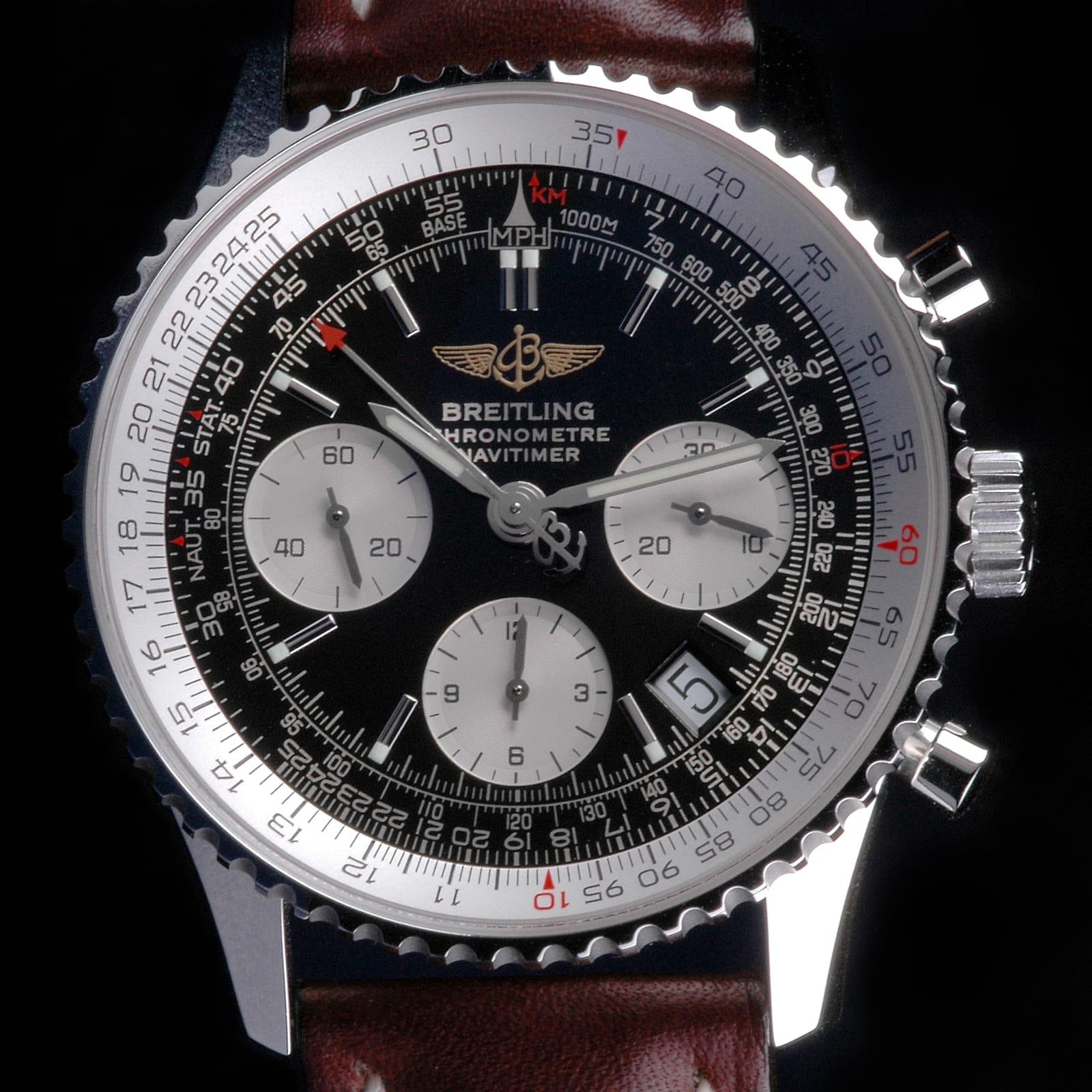
Aviation made the brand. Breitling's Huit Aviation department, established in 1937, supplied cockpit chronographs and onboard instruments to military and civil aircraft, including the Royal Air Force. The 1942 Chronomat put a circular slide rule on a wrist chronograph, and in 1952 the Navitimer refined that idea for pilots: a rotating logarithmic slide-rule bezel that could compute speed, distance, fuel burn, and unit conversions in the air. The Aircraft Owners and Pilots Association adopted the Navitimer, and it has stayed in production ever since, one of the longest continuous runs of any mechanical chronograph.
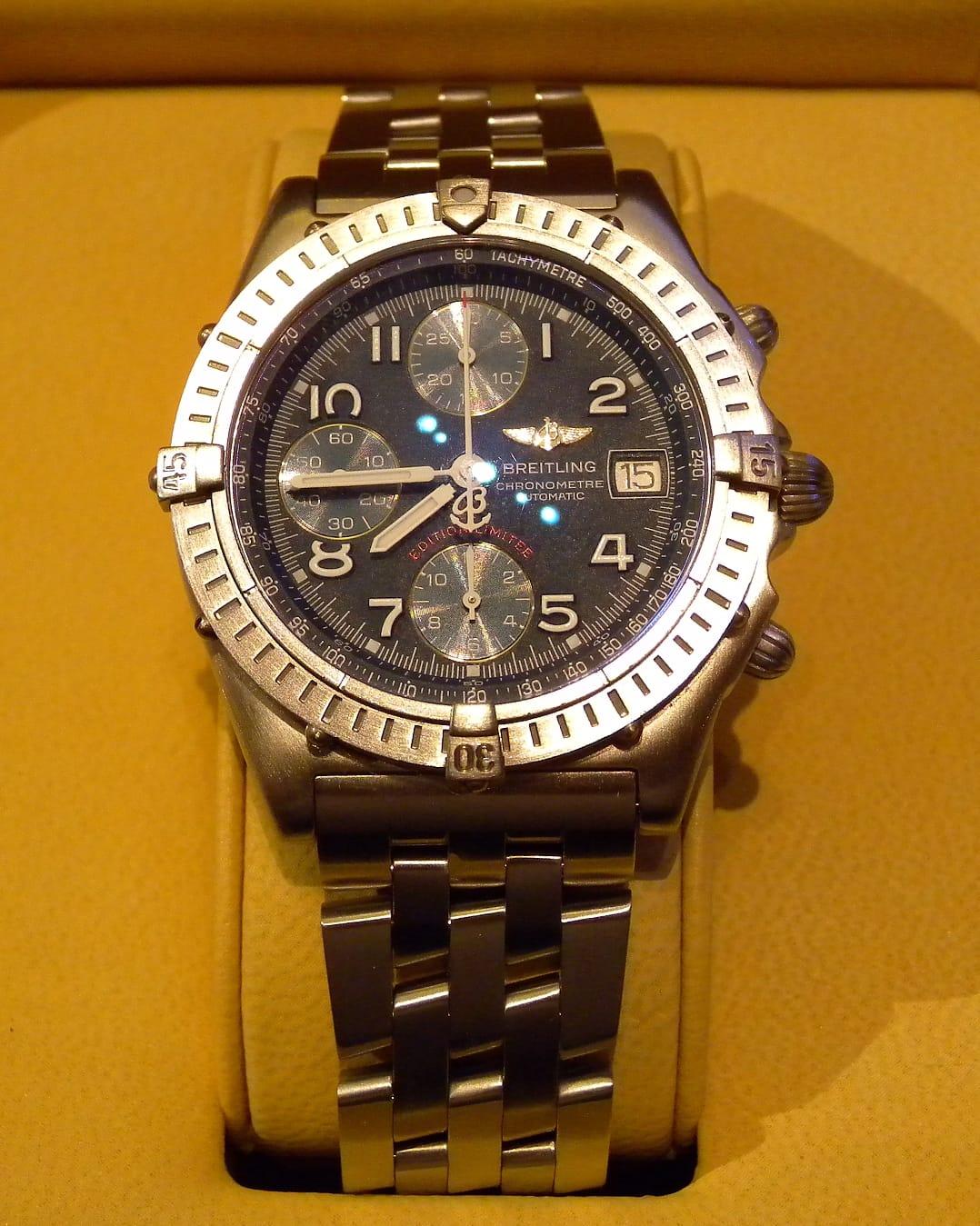
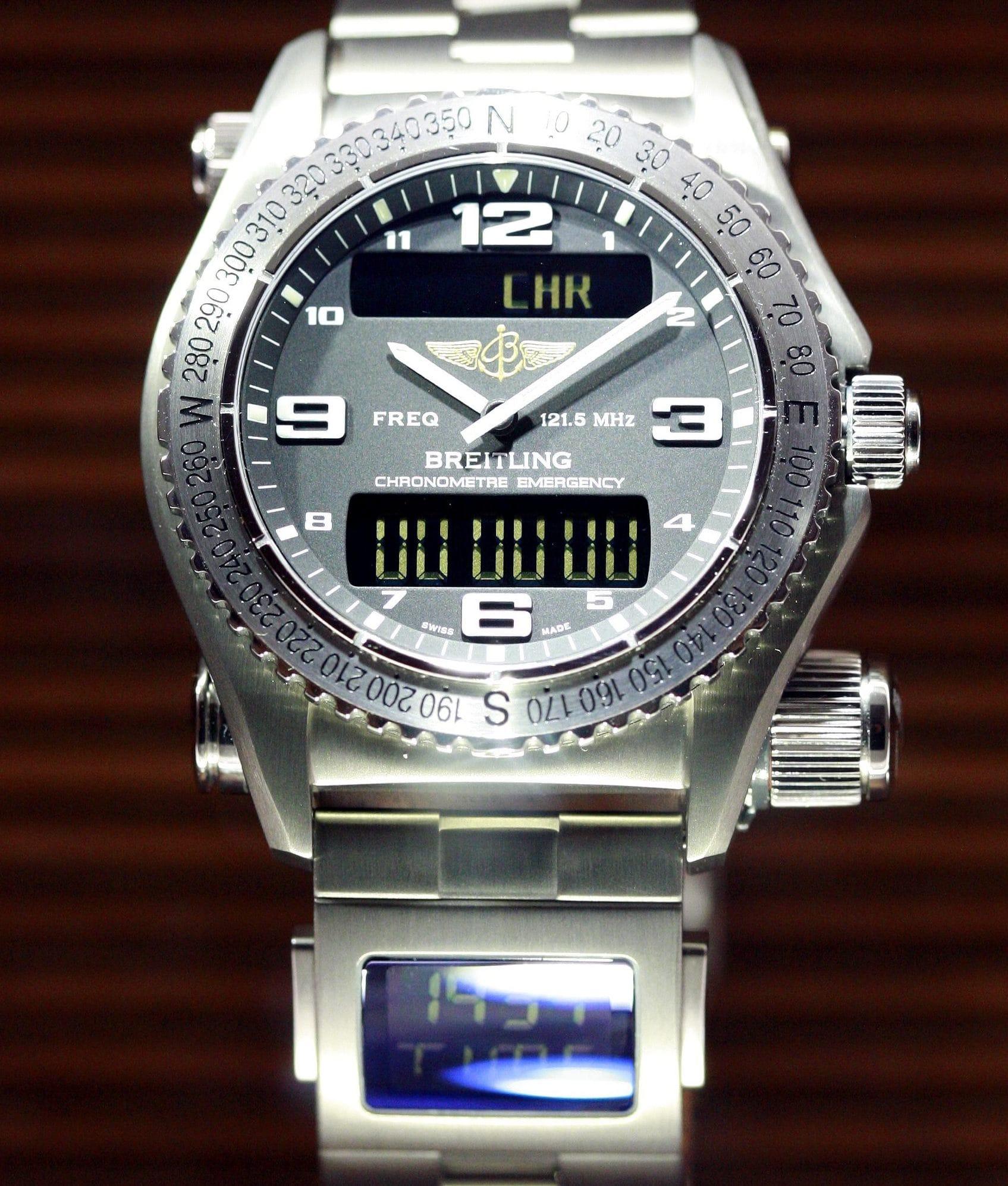
The quartz crisis nearly ended the company: Willy Breitling, the founder's grandson, closed the doors in 1979, and Sicura owner Ernest Schneider bought the Breitling and Navitimer names that year. The Schneider family rebuilt the brand around oversized, instrument-styled pilot's watches, relaunching the Chronomat in 1984 from a chronograph developed for Italy's Frecce Tricolori aerobatic team and adding the Emergency, with its integrated distress beacon, in 1995. Since the early 2000s Breitling has sent every watch it sells to COSC, so the entire catalog is chronometer-certified, and in 2009 it introduced its first in-house movement, the B01 column-wheel chronograph caliber.
In 2017 the Schneider family sold to private-equity firm CVC Capital Partners, which installed former IWC chief Georges Kern as CEO; Partners Group became the majority shareholder in April 2023. Under Kern the brand trimmed its catalog around the Navitimer, Chronomat, Superocean Heritage, Premier, and Avenger lines and pushed movement production in-house, most recently with the time-only B31 caliber introduced in 2025. Breitling operates from Grenchen, Switzerland, and remains one of the few Swiss brands of its size that is independent of the large luxury groups. It has since started building a group of its own: Universal Geneve was acquired in 2023 and Gallet in 2025, and Gallet relaunched in September 2026 at Geneva Watch Days as the accessible brand in what Breitling calls its House of Brands, sitting below Breitling with Universal Geneve positioned above it.